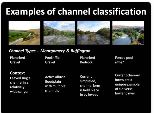
Quantitative measures linking process-based, physical habitat characteristics to salmonid utilization remains a central problem plaguing Pacific Salmon recovery efforts and sub-basin plans (NWPCC 2005) throughout the Columbia River basin. Multiple river classification systems developed to better monitor, manage and characterize river ecosystems (Hudson et al. 1992, Maxwell et al. 1995, Montgomery 1995, Poff 1997). In order to provide a more efficient and objective assessments of riverine conditions we develop a characterization of physical processes and classify salmon utilization among and between these habitats.
We take an approach that complements past efforts, specifically the Environmental Diagnosis and Treatment (EDT) techniques, by using extensive digital datasets and physical models to predict coarse scale, potential habitat conditions for several watersheds. Our approach classifies all stream segments in these watersheds using techniques developed from physical and statistical models. We model spatially extensive physical processes using existing 10 meter DEMs and 1:24,000 scale stream data sets that provide continuous values for several important hydrologic and geomorphic parameters. The resulting database of all stream classifications will be used to inform our restoration efforts.